
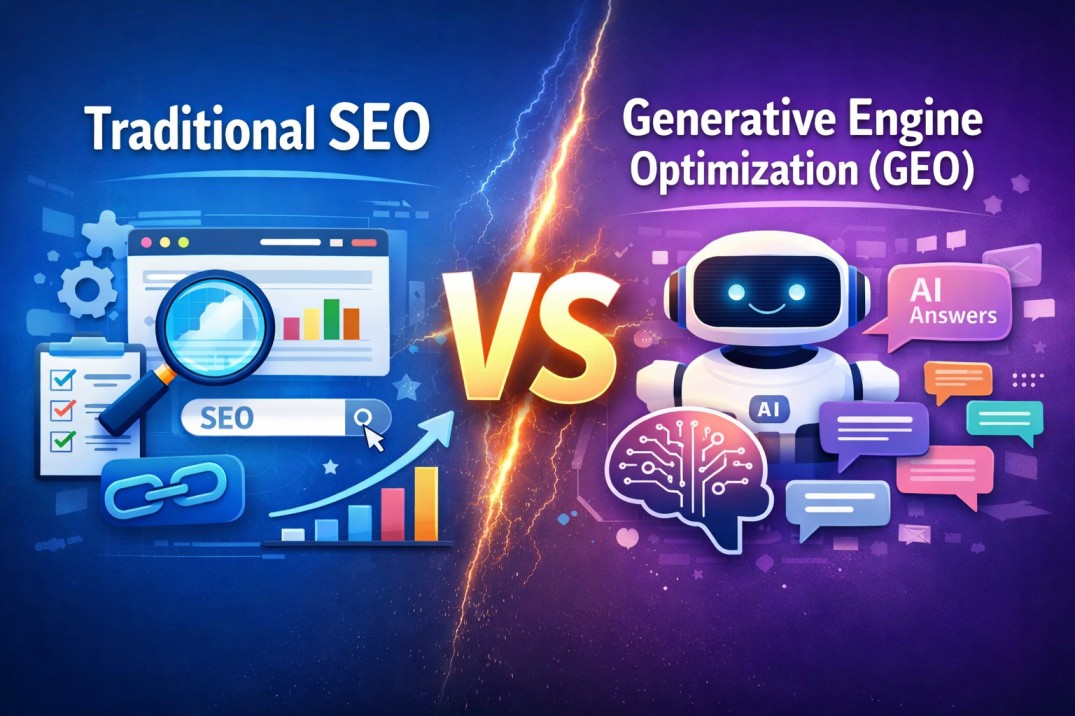
Search is evolving rapidly, and the way users find information has changed significantly. In the past, people searched on Google, clicked links, and explored multiple websites to get answers. Today, AI-powered tools deliver instant, conversational responses without requiring users to visit different pages. This shift is changing how businesses approach online visibility.
Traditional SEO has long been the backbone of digital marketing, helping websites rank higher and attract organic traffic. However, a new concept, Generative Engine Optimization (GEO), is emerging, focusing on making content visible within AI-generated answers. As user behavior continues to evolve, understanding the difference between SEO and GEO becomes essential. Businesses that adapt to both strategies will be better positioned to stay competitive, relevant, and visible in 2026 and beyond.
Related Articles:
PPC vs. SEO: Which Strategy is Better for Your Business?
HTML vs CSS vs JavaScript: What’s the Difference?
How Much Does It Cost to Develop an App in 2026?
What is Traditional SEO?
Traditional SEO (Search Engine Optimization) is the process of optimizing a website to improve its ranking on search engine result pages. The primary objective is to increase organic traffic by making content more visible to users searching for relevant queries.
SEO involves multiple components working together. It starts with identifying the right keywords and placing them strategically within the content. It also includes improving website structure, ensuring fast loading speed, and building authority through backlinks.
Key Elements of SEO:
✔️ Keyword optimization and content relevance
✔️ On-page and technical improvements
✔️ Backlink building for authority
Benefits of Traditional SEO:
✔️ Generates long-term organic traffic
✔️ Builds brand credibility
✔️ Supports consistent online growth
However, traditional SEO depends heavily on users clicking on search results, which is becoming less common with the rise of AI-driven answers.
Also Read: Why Is Regular SEO Maintenance Important for Your Website?
What is Generative Engine Optimization (GEO)?
Generative Engine Optimization (GEO) is a modern approach that focuses on optimizing content for AI-driven search platforms. Instead of only targeting rankings, GEO aims to make content appear in AI-generated responses.
As users increasingly prefer quick answers, content needs to be clear, structured, and informative. GEO prioritizes user intent and context rather than just keywords. This means content should directly answer questions and provide meaningful insights.
Key Elements of GEO:
✔️ Clear, intent-based and conversational content
✔️ Structured and easy-to-understand information
✔️ Strong authority and trust signals
Benefits of GEO:
✔️ Visibility in AI-generated answers
✔️ Reduced reliance on clicks
✔️ Alignment with future search trends
GEO complements SEO by ensuring your content remains visible even when users do not visit your website directly.
Also Read: What Are the Latest SEO Trends Every Website Owner Should Know?
Which Strategy is Better for Your Business in 2026?
The decision is not about choosing one strategy over the other but understanding how both can work together. Traditional SEO continues to play a vital role in driving traffic and improving search rankings. At the same time, GEO is becoming essential for maintaining visibility in AI-powered search environments.
Businesses should focus on creating high-quality content that serves both purposes. SEO helps attract users to your website, while GEO ensures your content is recognized and used by AI systems.
Best approach:
✔️ Maintain a strong SEO foundation
✔️ Adapt content for AI-driven platforms
✔️ Focus on clarity, structure, and user intent
By combining SEO and GEO, businesses can achieve sustainable growth, stronger authority, and better visibility in the evolving digital landscape.
Why Should Businesses Care About SEO vs GEO in 2026?
The shift toward AI-driven search is not a temporary trend, it is shaping the future of how users consume information. Businesses that ignore this shift risk losing visibility and relevance.
SEO still plays a critical role in bringing users to your website, but GEO ensures your content is seen even when users rely on AI for answers.
Key Reasons to Focus on Both:
✔️ User behavior is moving toward instant answers
✔️ AI platforms are becoming primary information sources
✔️ Competition is increasing across digital channels
Adapting early allows businesses to stay ahead and maintain a strong online presence.
Note: Why is Local SEO important for small and medium businesses? It helps attract nearby customers and grow faster. Logix Webtech improves your local visibility and boosts leads effectively.
How Can You Optimize Content for Both SEO and GEO?
To succeed in modern search environments, content must be designed for both search engines and AI systems. This requires a shift in how content is written and structured.
Practical Tips:
✔️ Write clear and informative content that answers user queries
✔️ Use proper headings and structured formatting
✔️ Focus on intent rather than excessive keyword usage
By aligning your content strategy with both SEO and GEO principles, you can improve visibility, authority, and long-term performance.
Ready to Upgrade Your Digital Strategy?
If you want your business to stay competitive in the changing digital world, it is important to adopt a balanced strategy. At LogixWebtech, we help businesses integrate SEO and GEO for better performance and long-term growth.
With the right mix of optimization techniques and content strategies, you can improve your rankings while also gaining visibility in AI-driven platforms. Partner with LogixWebtech to build a strong, future-ready online presence.