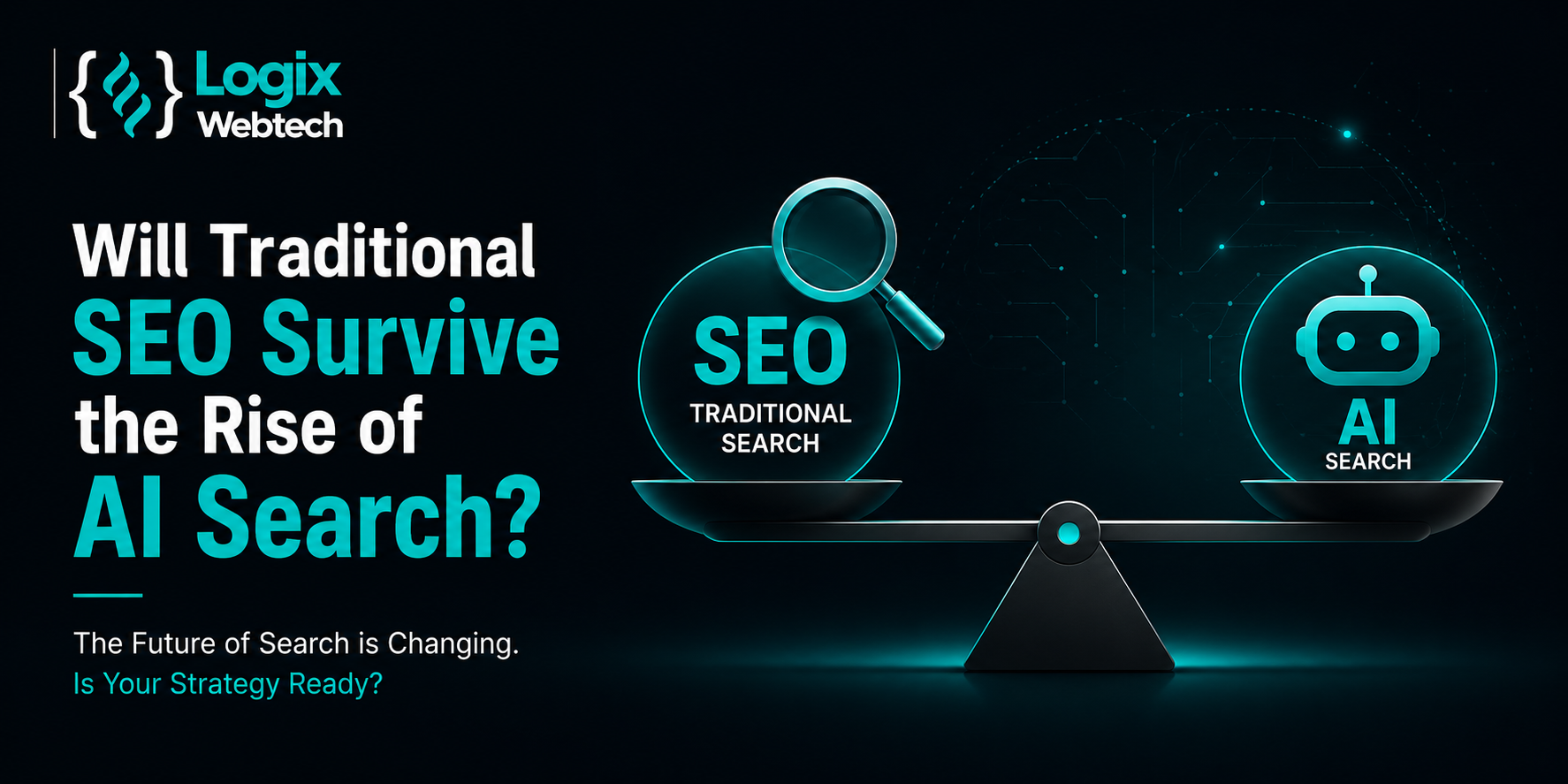
The search landscape is undergoing its biggest transformation since Google became the dominant search engine. With AI-powered search experiences, conversational assistants, and generative answer engines becoming increasingly popular, many businesses are asking an important question: Will traditional SEO survive the rise of AI search?
The short answer is yes—but it will need to evolve.
SEO has always adapted to changes in search algorithms, user behavior, and technology. From keyword stuffing to mobile-first indexing, every major shift has forced marketers to rethink their strategies. AI search represents the next evolution, not the end of SEO.
Traditional search engines provide users with a list of links based on their query. Users then visit websites to find the information they need.
AI search works differently. Instead of displaying multiple links, AI-powered systems generate direct answers by analyzing information from various sources. Users receive summarized responses, reducing the need to browse several websites.
Examples of AI-driven search experiences include:
• AI-generated search results
• Conversational search assistants
• Generative answer engines
• AI-powered recommendation systems
As these technologies become more advanced, they are changing how people discover and consume information online.
For years, businesses invested heavily in SEO to attract organic traffic from search engines. The strategy was straightforward: rank higher, get more clicks, and generate more leads.
AI search introduces a new challenge.
If users receive complete answers directly within AI interfaces, they may never click through to websites. This raises concerns about declining organic traffic and reduced visibility.
Many business owners wonder whether traditional SEO strategies such as keyword optimization, backlinks, and content creation will remain effective in the future.
The reality is more complex.
Despite the rapid growth of AI search, traditional SEO remains essential.
AI systems still need reliable sources of information. Most AI-generated answers are built using content that already exists on websites. Without well-optimized, authoritative content, AI engines would have nothing valuable to reference.
Search engines continue to rely on fundamental ranking signals such as:
• Content quality
• Website authority
• User experience
• Technical performance
These factors remain critical because they help determine which sources are trustworthy enough to influence AI-generated responses.
Rather than replacing SEO, AI search is increasing the importance of high-quality content.
The rise of AI search is changing how businesses approach optimization.
Instead of focusing solely on rankings, marketers must now focus on becoming trusted sources of information. Search visibility is no longer limited to blue links on a search results page.
Modern optimization involves the following:
• Creating comprehensive content
• Answering user questions clearly
• Demonstrating expertise
• Building topical authority
• Improving content structure
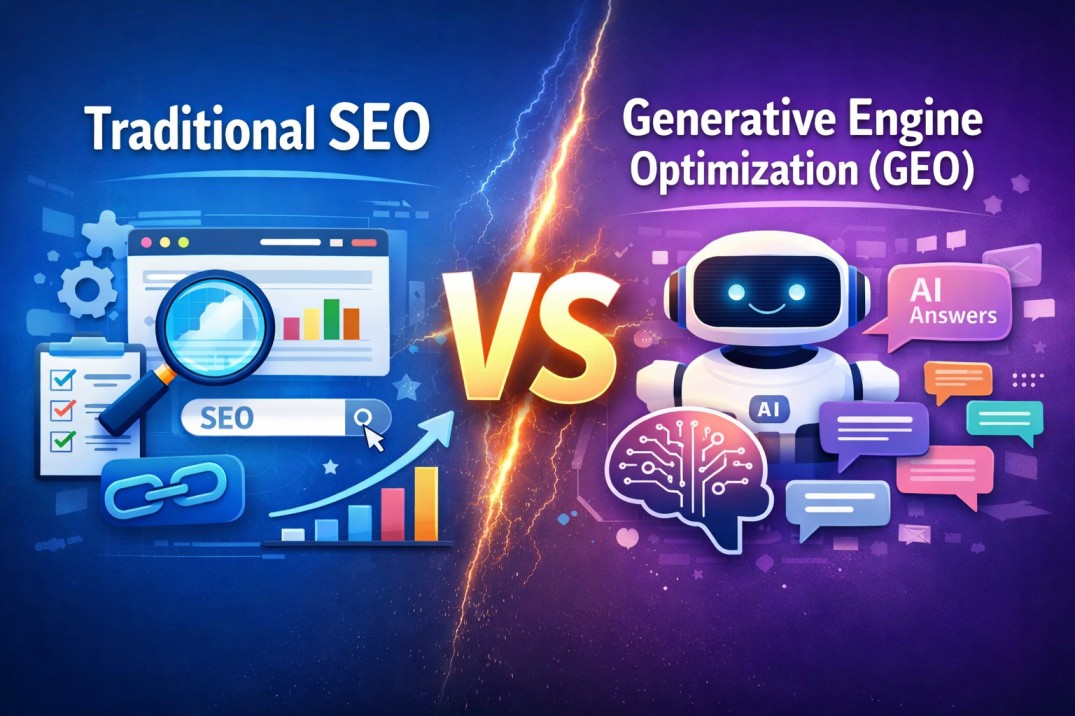
This shift has led to the emergence of Generative Engine Optimization (GEO), a strategy focused on helping content appear in AI-generated responses.
Businesses that embrace both SEO and GEO will have a significant advantage in the coming years.
Content quality has always mattered, but AI search makes it even more important.
Generic articles written only to target keywords are becoming less effective. AI systems prioritize content that is accurate, informative, and genuinely helpful.
Successful content should:
• Solve real problems
• Answer common questions
• Provide unique insights
• Demonstrate expertise
• Deliver clear value to readers
The websites that consistently publish useful and trustworthy information are more likely to be referenced by both search engines and AI systems.
Some people assume that AI search will make technical SEO irrelevant. That assumption is incorrect.
Website performance remains a critical ranking factor because search engines continue to evaluate user experience.
Key technical elements include the following:
• Fast loading speeds
• Mobile responsiveness
• Secure connections
• Structured data
• Clean site architecture
A technically optimized website helps search engines and AI systems understand content more effectively.
Businesses that ignore technical SEO may struggle to compete regardless of how advanced AI search becomes.
Keywords are evolving rather than disappearing.
Traditional SEO often focused on exact-match keywords. AI search places greater emphasis on context, intent, and natural language.
Users are increasingly asking conversational questions, such as:
"What is the best website development company in Hisar?"
"How can a small business improve SEO in 2026?"
Content creators must now optimize for topics and user intent rather than simply targeting isolated keywords.
This creates opportunities for businesses that provide in-depth and authoritative content.
The smartest approach is not choosing between SEO and AI optimization. Instead, businesses should combine both strategies.
Focus on:
• Publishing high-quality content regularly
• Building topical authority
• Improving website performance
• Optimizing for user intent
• Creating content that answers specific questions
Companies that adapt early will be better positioned as search continues to evolve.
It is unlikely that AI will completely replace traditional search engines.
Search engines remain valuable for:
• Website discovery
• Product research
• Local business searches
• Real-time information
• News and updates
AI excels at delivering answers, but users still need ways to explore sources, compare options, and discover new information.
The future will likely involve a combination of traditional search and AI-driven experiences rather than one replacing the other.
Related Articles:
Headless CMS vs Traditional CMS: What Should You Choose in 2026?
Traditional SEO vs Generative Engine Optimization (GEO)
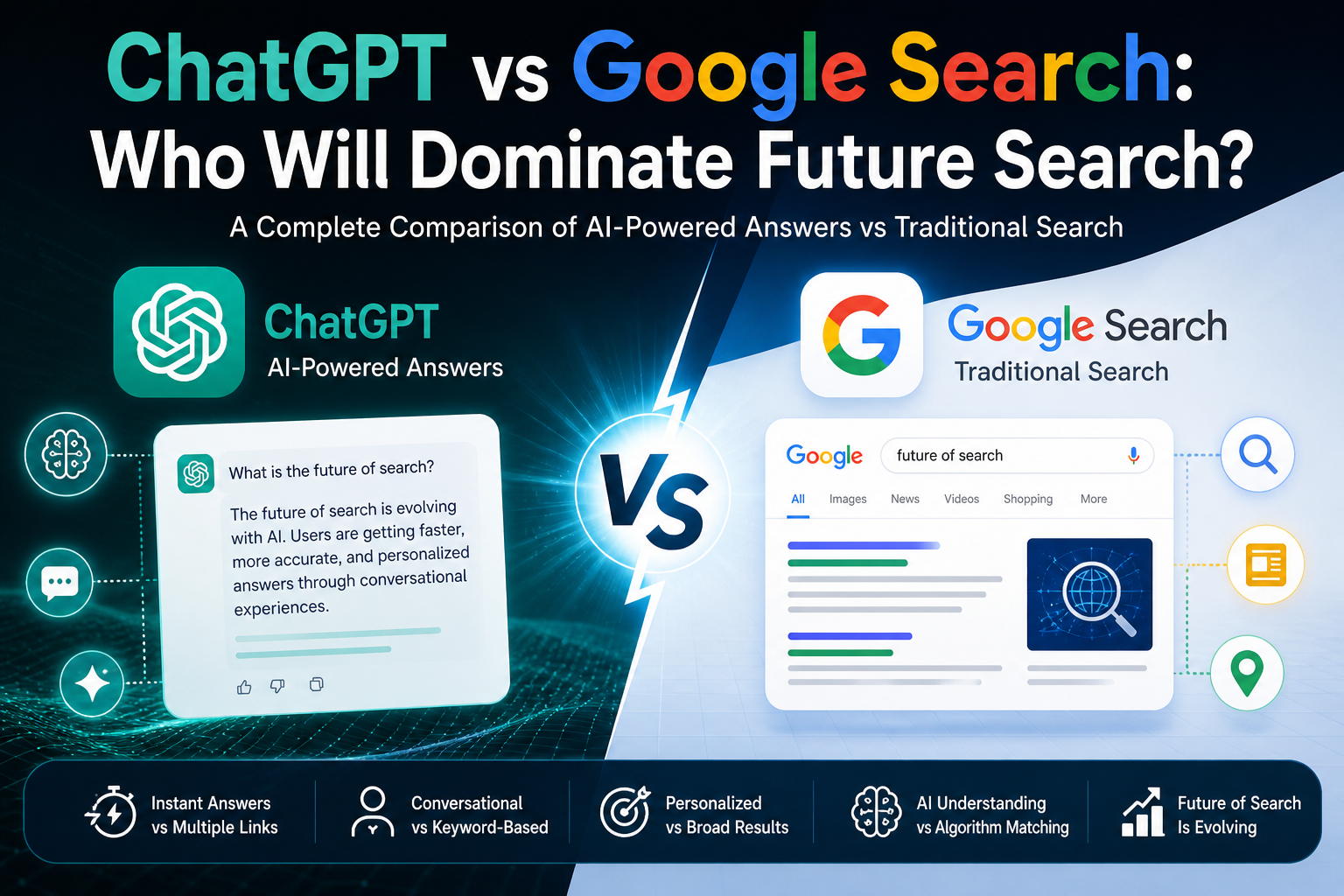
ChatGPT vs Google Search: Who Will Dominate Future Search?
The future of search is evolving rapidly, and businesses that adapt early will have the greatest advantage. Whether you're looking to improve your Google rankings, optimize for AI-powered search experiences, or build a stronger online presence, having the right strategy is essential.
LogixWebtech helps businesses create SEO-friendly, future-ready websites and content strategies designed to perform in both traditional search engines and emerging AI-driven platforms. Contact our team today and stay ahead of the next generation of search.
Traditional SEO is not dying. It is evolving.
Businesses that continue relying on outdated tactics may struggle. Still, those that focus on quality content, user experience, and authority will remain visible in both traditional search results and AI-generated responses.
The future belongs to organizations that combine SEO with modern optimization strategies. Instead of asking whether SEO will survive, businesses should focus on how quickly they can adapt.
As AI search continues to grow, the most successful websites will be those that provide valuable information, build trust, and serve users better than their competitors.
No, AI search is changing how information is delivered, but SEO remains important because AI systems still rely on high-quality websites as information sources.
GEO is the practice of optimizing content so it can be easily understood, referenced, and cited by AI-powered search systems and generative answer engines.
Yes, but search engines now focus more on user intent, context, and topic relevance rather than exact keyword matching alone.
Businesses should create authoritative content, improve website performance, answer user questions clearly, and combine SEO with GEO strategies.
The future of SEO involves a blend of traditional optimization, content authority, user experience, and AI-friendly content structures that help businesses remain visible across multiple search platforms.