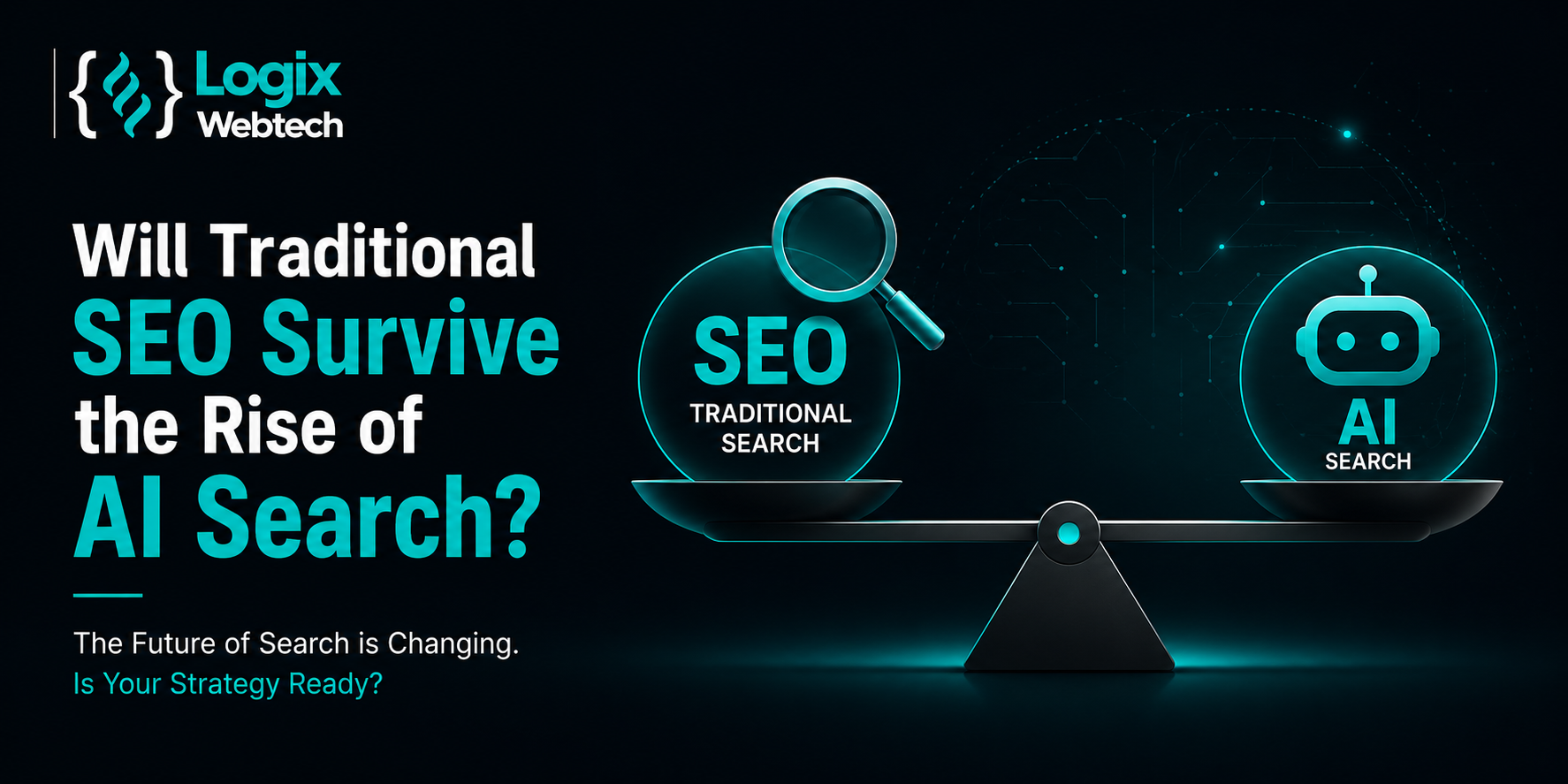
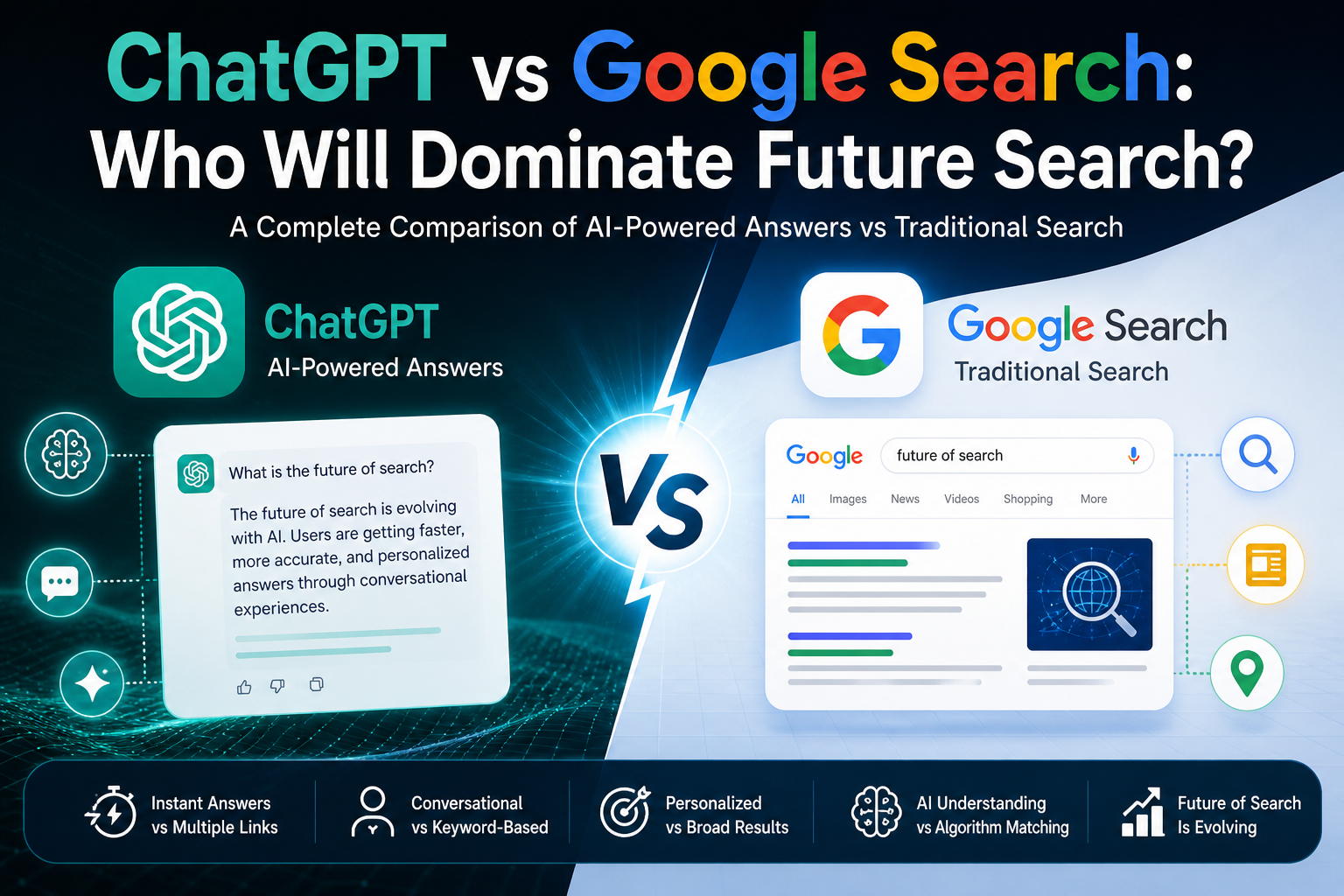
The way people search for information is evolving rapidly. For years, search engines have been the primary source of discovering content online. But now, AI-powered tools are changing how users interact with information in a more direct and conversational way.
This shift has created a major discussion: ChatGPT vs. Google Search. Who will dominate the future of search?
At LogixWebtech, we see this not just as a competition but as a major shift in digital behavior. Users are no longer satisfied with links alone; they expect quick, accurate, and easy-to-understand answers.
Earlier, search was a process. Users typed a query, explored multiple websites, compared information, and then formed their own understanding. It required time, patience, and effort.
Today, user expectations have changed significantly. People prefer:
✔️ Instant responses
✔️ Clear explanations
✔️ Less effort in finding answers
This shift is why AI tools are gaining attention. Instead of browsing several pages, users can now get a structured answer in seconds, which improves efficiency and saves time.
👉 Building powerful Android & iOS apps that engage customers and scale with your business.
Google has dominated the search industry because it organizes and ranks the world’s information effectively. It provides access to millions of sources and allows users to explore different viewpoints before making decisions.
Its strength lies in giving users control over their search journey.
Google is especially effective for:
✔️ Finding websites, blogs, and services
✔️ Getting real-time updates and news
✔️ Searching for local businesses
✔️ Comparing products and reviews
Because of its vast ecosystem and data accuracy, Google remains deeply integrated into everyday online activity.
ChatGPT introduces a new way of interacting with information. Instead of presenting multiple links, it provides a direct answer in a conversational format.
This creates a smoother and faster experience, especially for users who want understanding rather than exploration. It simplifies complex topics and delivers information in a way that is easier to consume.
At LogixWebtech, we’ve observed that this approach is becoming popular for learning, research, and decision-making where clarity matters more than multiple options.
The core difference lies in how both platforms function.
Google works as a search engine, helping users discover content from across the internet. ChatGPT works as an answer engine, focusing on delivering clear and structured responses.
This changes user behavior significantly. Instead of exploring multiple sources, users are starting to rely on summarized answers that save time and effort.
In simple terms:
✔️ Google offers multiple choices
✔️ ChatGPT delivers direct understanding
This shift is shaping the future of how information is consumed online.
This transformation is reshaping how businesses approach digital marketing.
Earlier, the main goal was to rank higher on search engines and drive traffic to websites. Now, users may get their answers instantly without clicking multiple links, which changes traffic patterns.
To stay relevant, businesses need to:
✔️ Focus on high-quality and meaningful content
✔️ Structure information clearly for better understanding
✔️ Build authority and trust in their niche
This is where combining SEO with modern optimization strategies becomes important to maintain visibility across both search engines and AI platforms.
This is one of the most discussed questions, but the answer is not straightforward.
Google still leads in areas where real-time information, location-based results, and multiple sources are important. It remains essential for discovery and navigation.
ChatGPT, however, is more effective for understanding topics, simplifying information, and answering complex questions quickly.
Rather than replacing each other, both platforms are being used for different purposes based on user needs.
The future is not about one platform replacing the other; it’s about integration.
Search engines are becoming more AI-driven, while AI tools are improving their ability to provide accurate and useful responses. This convergence will shape the next phase of search.
We can expect search experiences to become the following:
✔️ More conversational
✔️ More personalized
✔️ Faster and more intuitive
The distinction between searching and asking will continue to blur.
Related Articles:
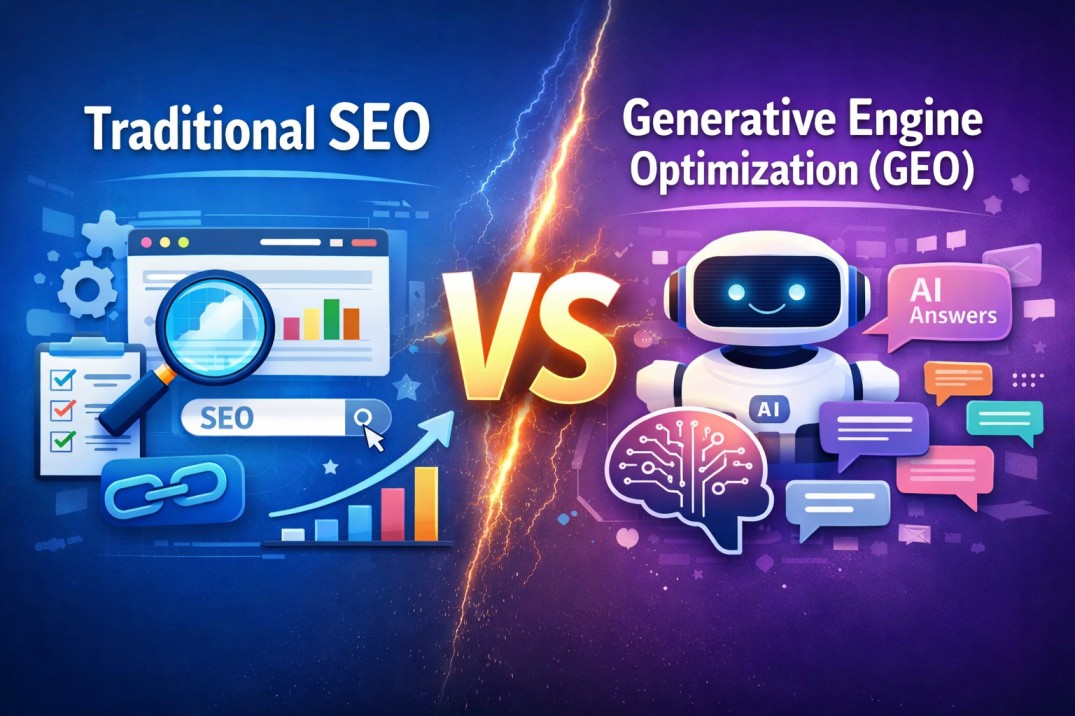
Traditional SEO vs Generative Engine Optimization (GEO)
Headless CMS vs Traditional CMS: What Should You Choose in 2026?
Flutter vs React Native: Which Framework is Better in 2026?
Businesses should focus on adapting instead of choosing sides.
A strong strategy includes creating content that is not only optimized for search engines but also easy for AI systems to understand and present.
A practical approach includes:
✔️ Writing clear and informative content
✔️ Focusing on user intent rather than just keywords
✔️ Improving website performance and usability
By aligning content with both search engines and AI tools, businesses can stay competitive in the evolving digital landscape.
The debate of ChatGPT vs. Google Search is not about which one will dominate completely; it’s about how search is evolving.
Google will continue to lead in discovery, while ChatGPT will grow as a powerful tool for delivering direct answers.
The real future lies in combining both approaches. Businesses that adapt early will have a strong advantage in visibility and user engagement.
No, ChatGPT will not fully replace Google Search. Both serve different purposes, with Google focusing on discovery and ChatGPT providing direct answers. The future of search will likely involve the integration of both technologies.
Google remains the primary platform for SEO, but ChatGPT is changing how users consume information. Businesses should optimize content for both search engines and AI-driven platforms to maintain visibility and reach a wider audience.
GEO stands for Generative Engine Optimization. It focuses on creating structured, high-quality content that AI tools can easily understand and use to generate accurate, helpful answers for users across different platforms.
Search is becoming more conversational and user-focused. Instead of browsing multiple links, users now expect quick, clear answers. AI-powered tools are making search faster, more personalized, and easier to interact with.
Businesses should focus on creating valuable content, improving website performance, and understanding user intent. Combining SEO with AI-focused strategies will help maintain visibility and ensure long-term digital growth in evolving search environments.