When businesses start building a website or digital product, one of the biggest decisions they face is choosing the right CMS. At first glance, all CMS platforms may look similar, they help you manage content. But the way they work behind the scenes can completely change your website’s performance, scalability, and even your SEO results.
Today, the discussion is no longer just about “which CMS is easy,” but rather which CMS is future-ready. This is where the debate of Headless CMS vs Traditional CMS becomes important.
At LogixWebtech, we’ve worked with both architectures across different industries, from small business websites to scalable enterprise platforms. One thing is clear, your CMS is not just a tool, it’s the foundation of your digital presence. A wrong decision today can limit your growth tomorrow, while the right one can give you a strong competitive advantage.
Related Articles:
HTML vs CSS vs JavaScript: What’s the Difference?
How Much Does It Cost to Develop an App in 2026?
Why Is Regular SEO Maintenance Important for Your Website?
Let’s simplify this in a practical way.
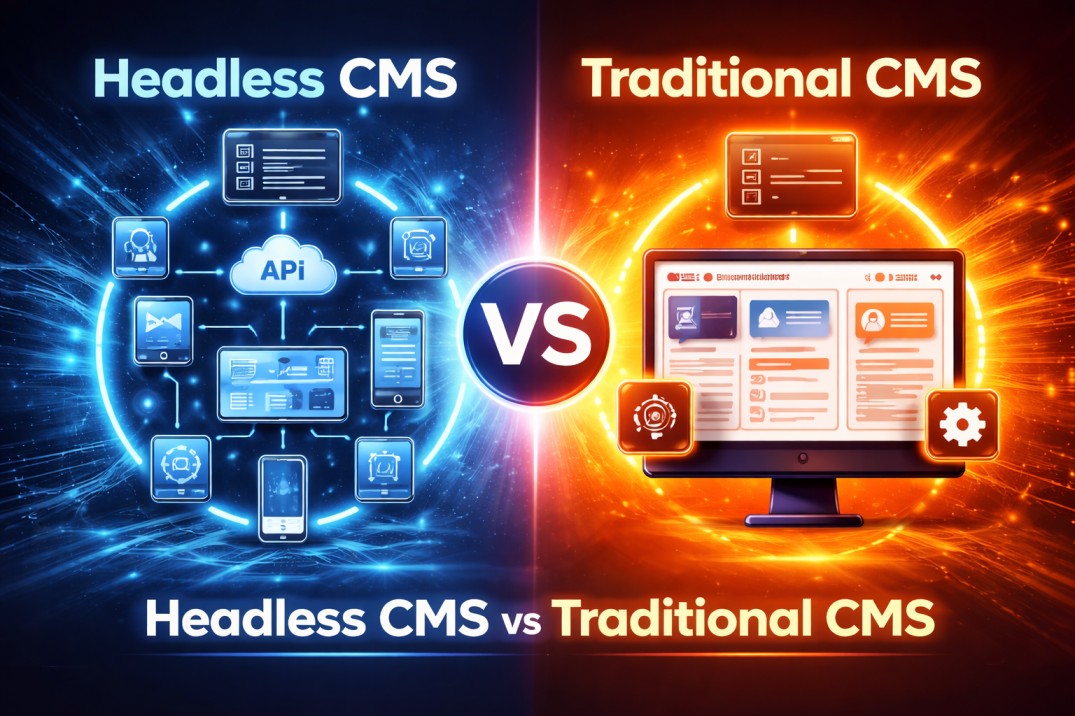
A Traditional CMS is like a ready-made shop. You get everything together, design, backend, templates, and you just start using it. Platforms like WordPress are popular because they are easy and quick.
A Headless CMS, on the other hand, is like building your own custom store. It gives you the backend (content), but how you display it is completely up to you. You can use modern technologies like React or Vue to create fast, dynamic experiences.
So the real difference is:
✔️ Traditional CMS = Convenience
✔️ Headless CMS = Control + Performance
But there’s more beneath the surface. Traditional CMS systems are tightly connected, which means any change in design or functionality can affect the entire system. In contrast, headless CMS separates these layers, allowing teams to work independently on backend and frontend without conflicts. This flexibility becomes extremely valuable as your business grows and your digital needs become more complex.
Read Also: Traditional SEO vs Generative Engine Optimization (GEO)
Most people think CMS choice only affects development. That’s not true.
Your CMS directly impacts:
✔️ Website speed (important for rankings)
✔️ Mobile performance
✔️ User experience
✔️ Content flexibility
✔️ Future scalability
Google now prioritizes fast, user-friendly, and technically strong websites. Core Web Vitals, page speed, and mobile responsiveness are no longer optional, they directly influence rankings.
A traditional CMS can perform well in SEO if optimized correctly, but as your website grows, maintaining speed and performance becomes challenging. On the other hand, a headless CMS allows developers to build lightweight, fast-loading frontends that align better with modern SEO requirements.
This is one of the key reasons why forward-thinking companies are re-evaluating their CMS choices.
Let’s be practical, traditional CMS is not outdated. It still works very well in many cases.
If you are running:
✔️ A small business website
✔️ A blog or portfolio
✔️ A basic service-based site
Then a traditional CMS can save you time and money.
You don’t need a developer for every small change. You can install plugins, choose a theme, and go live quickly. This simplicity is the biggest strength of traditional CMS platforms.
Additionally, there is a huge ecosystem of plugins and themes available, which makes it easier to add features like SEO tools, contact forms, eCommerce functionality, and more without custom development.
However, problems start when your website grows.
As you add more plugins and features, your website can:
✔️ Become slower due to heavy code
✔️ Face compatibility issues
✔️ Be more vulnerable to security risks
✔️ Require frequent maintenance and updates
Over time, managing all this can become complicated and inefficient, especially for growing businesses.
Read Also: Flutter vs React Native: Which Framework is Better in 2026?
Now let’s talk about why everyone is discussing headless CMS.
A headless CMS separates content from design. This allows developers to build extremely fast frontends and deliver content via APIs.
What does this mean in real life?
✔️ Your website loads significantly faster
✔️ You can use the same content across multiple platforms (website, mobile apps, smart devices)
✔️ You are not restricted by themes or templates
✔️ You get better control over performance and user experience
Another major advantage is flexibility. Developers can choose modern frameworks like React, Next.js, or Vue to create highly optimized and interactive user interfaces.
At LogixWebtech, we often recommend headless CMS for businesses that are planning long-term digital growth, especially those who want to build scalable platforms or deliver content across multiple channels.
Imagine two businesses:
Uses WordPress with heavy themes and plugins
✔️ Website becomes slow over time
✔️ SEO performance drops due to speed issues
✔️ Needs constant maintenance and troubleshooting
✔️ Struggles to scale when traffic increases
Uses Headless CMS with a modern frontend
✔️ Fast loading website with optimized performance
✔️ Better user experience across devices
✔️ Easily scalable as traffic grows
✔️ Flexible enough to expand into mobile apps
Now, which one do you think Google will prefer?
Search engines prioritize user experience. Faster websites with better structure and performance naturally rank higher. This makes headless CMS a strong choice for businesses focused on long-term SEO growth.
Here’s something most blogs don’t tell you.
Headless CMS is powerful, but it’s not simple.
You will need:
✔️ Skilled developers
✔️ Proper architecture planning
✔️ Higher initial investment
Unlike traditional CMS, where you can launch quickly, headless CMS requires time and expertise to set up properly.
There is also a learning curve involved. Content teams may need training to adapt to new workflows, and businesses must be ready to invest in development resources.
So if your goal is just to “launch a website quickly,” headless might not be the right choice.
But if your goal is to build a high-performance, scalable digital platform, then it becomes a smart long-term investment.
Instead of overthinking, ask yourself these questions:
✔️ Do I need a simple website or a scalable platform?
✔️ Will I expand to mobile apps or multiple platforms in the future?
✔️ Is performance critical for my business growth?
✔️ Do I have access to a development team?
If most of your answers lean toward growth, performance, and scalability, then headless CMS is the better option.
If your focus is simplicity, affordability, and quick launch, then traditional CMS is the right choice.
Making the right decision is not about following trends, it’s about aligning technology with your business goals.
The debate of Headless CMS vs Traditional CMS is not about which one is better, it’s about which one fits your current stage and future vision.
Traditional CMS is perfect for starting fast and managing simple websites
Headless CMS is ideal for businesses that want to scale, improve performance, and stay future-ready
At LogixWebtech, we help businesses not just build websites, but choose the right technology that supports long-term growth, better SEO performance, and a strong digital presence.
Yes, headless CMS can improve SEO by enabling faster loading speeds, better performance, and flexibility in optimization. However, it requires proper technical setup, including structured data, metadata handling, and frontend optimization to achieve strong results.
Companies are moving to headless CMS because it offers greater flexibility, scalability, and performance. It allows content delivery across multiple platforms like websites and mobile apps, while giving developers full control over frontend experiences and modern technologies.
No, traditional CMS is not outdated. It remains a practical solution for small businesses, blogs, and simple websites. It is easy to use, cost-effective, and allows quick deployment without requiring advanced technical knowledge or development resources.
Headless CMS can be more expensive initially due to development, setup, and maintenance costs. However, it provides better long-term value by improving scalability, performance, and flexibility, making it a smart investment for growing and future-focused businesses.
The choice depends on your business goals. Choose a traditional CMS if you need simplicity and quick setup. Choose a headless CMS if you want better performance, scalability, and the ability to expand across multiple digital platforms in future.